
The American Thanksgiving menu has a rhythm: long travel, early prep, a midmorning burst of fresh air, a big meal, and long stretches of togetherness that need a focal point. Sports slid neatly into that pattern more than a century ago and never let go.
Football in particular offers a ready-made schedule—daytime kickoffs, a prime-time game, and easy background viewing, so it often becomes the soundtrack to carving and leftovers. High school rivalry games and neighborhood “Turkey Bowls” add a local layer, while citywide running events give morning energy before the feast. All of this is sticky because it scales equally well for a full house or a few people, and it travels across generations without much setup.
Yet tradition is roomy, not rigid. The same conditions that make sports convenient, predictable timing, repeatable rituals, low setup, also make space for other shared activities. Many families work those in between kickoff windows or instead of them: brisk walks at dawn, card nights after pie, or community races that unite cousins, aunts, and uncles as fellow participants.
A table game tradition: poker on Thanksgiving day
Before wall-to-wall broadcasts and fantasy leagues, a different tabletop ritual kept people around the same surface after dinner: Thanksgiving poker with friends. It fit the holiday’s pace. The deck lived in a kitchen drawer, the chips were buttons or matchsticks, and the rules were simple enough that a cousin could learn in five minutes while the coffee brewed. Short rounds created a natural stop-start rhythm; you could finish a hand when the oven timer beeped or when someone brought out a second dessert. The game’s real draw was social, not financial. The table gathered storytellers and quiet players alike, and the banter—about recipes, travel mishaps, or school, mattered as much as the cards.
This habit thrived because Thanksgiving already collects the ingredients of a great home game. People are in one place for hours. There’s a natural “intermission” after the main meal. And there’s a shared desire to do something together that doesn’t require leaving the house or buying gear. Unlike solitary screens, cards invite eye contact and unhurried conversation. The pace is elastic: you can keep it light with low or no stakes, rotate dealers, or switch to variants that keep everyone involved. Even the simple setup signals inclusion; when you slide a seat out and say, “You in?” you’re hosting.
Framed this way, the tradition isn’t about gambling; it’s about a ritual that gives shape to the evening—just as afternoon games shape the day. In some homes, poker on Thanksgiving day became the evening mirror of the morning’s backyard toss: same crew, same laughter, different surface. And because it is portable and personal, it coexists easily with televised sports. Some will drift toward the living room; others will lean into the next hand. Both groups are still sharing the holiday, just in different circles around the same spirit of friendly play.
Why sports dominate the holiday, and how participation widens the tent
The numbers are huge. In 2024, the three NFL games on Thanksgiving were watched by an average of 34.2 million people — the most ever for that day. One 2022 game alone had 42.1 million viewers, making it the most-watched regular-season game since tracking began. And viewing isn’t just big, it’s concentrated. Nielsen’s tracking shows Thanksgiving Day among the few 2024 days that crossed 100 billion TV minutes, a sign of how powerfully the holiday gathers eyeballs around shared screens.
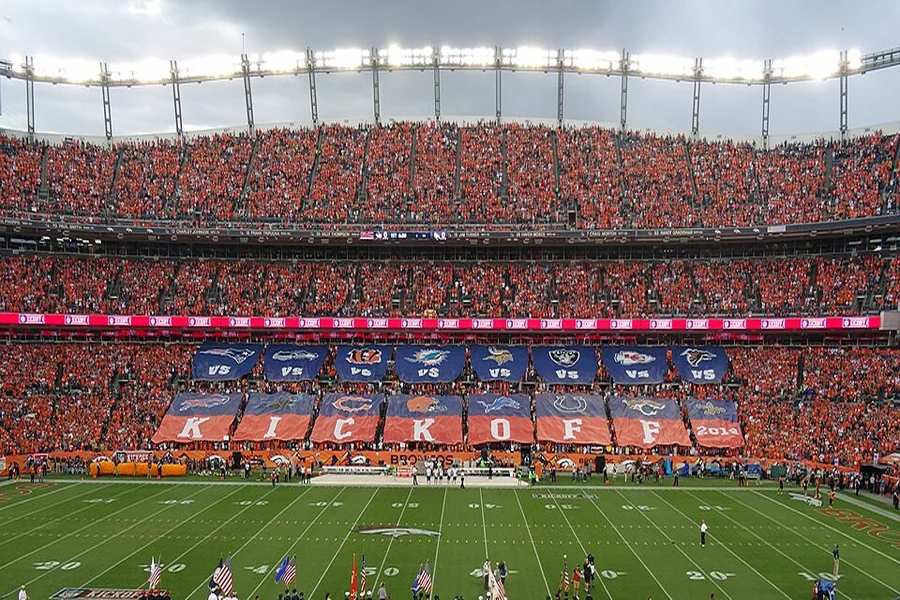
From packed stands like this to living rooms at home, the NFL’s Thanksgiving games become the day’s soundtrack, an easy anchor between cooking, catching up, and dessert.
But there’s another lane that has quietly grown: participation. Thanksgiving morning is now the country’s biggest running day. One event platform alone recorded 1,109,909 registrants across 936 races in 2024, with more than $3.6 million raised for charity. And these events skew large: 34% of Thanksgiving-Day races topped 1,000participants, far above typical weekends. These numbers show that “sports on Thanksgiving” increasingly means doing, not just watching.
It’s worth noting that viewership and participation do not compete; they sequence. Many households run or spectate in the morning, cook through midday, and watch in the afternoon. If you want alternatives to stick, aim for the open spaces in that cadence.
Tradition is deep but flexible: designing alternatives that feel natural
Although playing a casino game in a friendly environment was an old tradition, the sports link to the holiday is older than home TV. In 1876, Yale and Princeton played a football game on Thanksgiving. By the 1880s, it had become a big social event in New York. A newspaper in 1891 even said the game had replaced the Thanksgiving dinner as the day’s main event. Within a few years, people all over the country were playing and watching football. By the mid-1890s, around 5,000 games were held on Thanksgiving by schools and clubs. That’s why football feels like a natural part of the holiday today.
Still, history also shows that people adopted what fit the day: a focal point with clear start and end times, easy rituals, and room for everyone in the house. You can borrow the same design for non-screen traditions. Start with timing: after expressing the words of gratitude for the festive evening, place your shared activity where the day naturally widens: early morning (walks, local 5Ks), late afternoon (tabletop games), or the hour between cleanup and dessert (a music swap, a gratitude round, a neighborhood stroll).
Add light structure: simple rules, a visible “join anytime” seat, and a timeboxed window so no one worries about missing other parts of the holiday. Finally, read the room: if part of the group loves the late game, set a parallel station nearby for conversation or cards. The point is not to “replace” anything; it’s to give people more than one good way to be together.