

A gimbal is a sophisticated device designed to maintain stability for cameras and other electronic equipment, enabling smooth footage even during movement. Initially developed for maritime navigation to keep instruments level on ships, the technology has evolved and found applications in photography, filmmaking, drone operation, and mobile videography, with the gimbal playing a central role in stabilization. Modern gimbals use advanced mechanical and electronic systems to counteract unwanted motion, allowing users to capture sharp, fluid visuals regardless of the environment. Their ability to preserve a level horizon while supporting dynamic camera angles has changed the way creators—both amateur and professional—approach visual content. Continuous technological improvements have introduced features such as automated tracking, smartphone connectivity, and lightweight designs, making gimbals more versatile and portable. Understanding how these devices function, and how they can be applied, offers insights into achieving professional-standard visuals with minimal effort.
The Concept of Cinematic Stabilization
Cinematic stabilization refers to the methods and tools used to reduce unintentional camera movements and deliver smooth, visually engaging footage. Stabilization techniques enhance the clarity and aesthetic quality of video content, allowing viewers to focus on storytelling rather than distractions caused by shaky shots. Over the decades, stabilization has evolved from the use of simple tripods to advanced gyroscopic stabilizers, software-assisted algorithms, and gimbals. Filmmakers have consistently sought methods to capture fluid motion, leading to innovations such as the Steadicam in the 1970s, which brought professional-level movement control to dynamic sequences. Today, stabilization plays a central role in producing content that meets high audience expectations across social media, advertisements, and cinema.
How Gimbal Technology Works
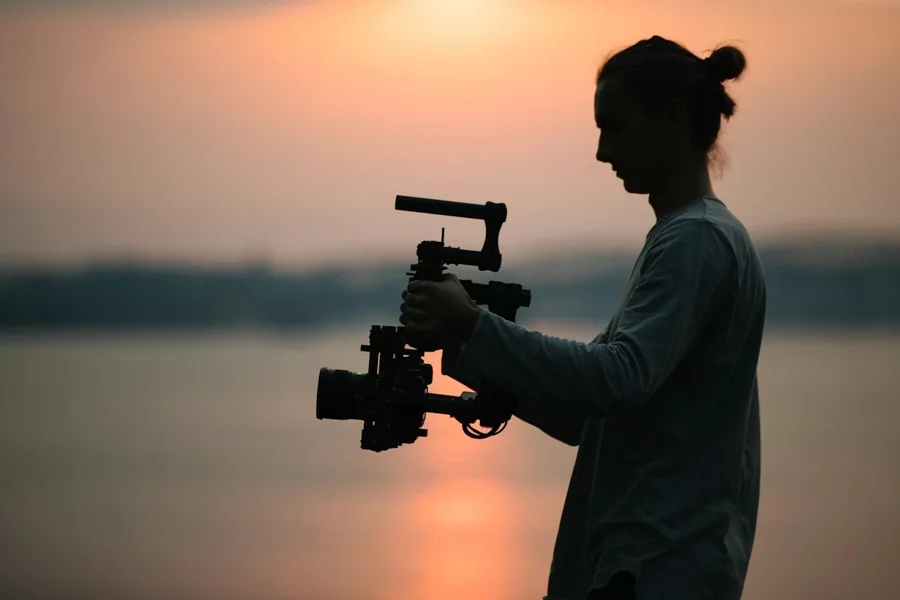
A gimbal functions through a system of pivot points and axes that maintain balance while allowing controlled rotation. Typically, a gimbal employs three axes—tilt, pan, and roll—supported by motors and sensors. These components work in unison to detect and correct unintended movements in real time, keeping the camera steady during handheld or mounted use. Mounting brackets secure the camera or device, while adjustable handles provide ergonomic support. Control buttons and settings allow users to fine-tune operation according to specific shooting conditions. The combination of mechanical structure and electronic feedback enables gimbals to perform tasks that were once only possible with heavy and complex studio setups, making cinematic-level results accessible to a broader audience.
Varieties of Gimbals
Modern gimbals come in multiple configurations, each suited for different types of filming. Single-axis models control motion along one plane, providing simple stabilization for basic applications. Dual-axis gimbals manage two planes of movement, offering enhanced smoothness for mid-range equipment. Three-axis gimbals provide comprehensive stabilization along all primary axes, allowing filmmakers to achieve fully fluid motion even in challenging conditions.
Handheld gimbals are ideal for stabilizing smartphones and compact cameras during events, travel, or vlogging. Drone-mounted gimbals stabilize aerial footage, ensuring crisp and smooth images from above. Professional DSLR and mirrorless gimbals deliver cinematic-quality movement for filmmaking and commercial projects. Understanding the capabilities of each type helps users select the most suitable device for their intended purpose, aligning equipment choice with creative goals.
The Influence of Gimbals on Filmmaking
Gimbals have significantly reshaped how moving images are captured. By offering reliable stabilization, they allow filmmakers to create complex, dynamic shots without the risk of unwanted camera shake. This technology has been effectively used in numerous acclaimed films. For instance, “Birdman” utilized extended, flowing shots that rely heavily on stabilization technology to maintain continuity. Action sequences in “Mad Max: Fury Road” benefited from stabilized movement in high-intensity environments. Even intimate, handheld-style storytelling, as seen in “The Revenant,” achieved a fluid aesthetic thanks to gimbal-assisted camera work. These examples illustrate how gimbals can expand creative possibilities and elevate production quality across genres.
Selecting an Appropriate Gimbal
Choosing a gimbal requires attention to multiple practical aspects. Users must match payload capacity with the weight of their camera or device and confirm compatibility with their equipment. Battery life, stability performance, portability, and ease of handling are critical considerations for consistent operation in various settings. Additional features, such as intelligent shooting modes, mounting options, and software integration, can further improve usability and output quality.
Leading brands provide options suited to different levels of expertise and applications. DJI offers advanced technology and innovation for both professional and semi-professional use. Zhiyun provides flexible designs and practical features that cater to versatile shooting conditions. FeiyuTech delivers intuitive, user-friendly gimbals for enthusiasts and emerging creators. Evaluating these attributes ensures the chosen gimbal meets technical requirements while supporting creative objectives.
The Future of Gimbal Technology
Advancements in gimbal technology continue to expand its potential applications. Upcoming developments may include refined tracking systems, reduced form factors, and intelligent AI-assisted stabilization. Such improvements are expected to broaden the creative opportunities for filmmakers, drone operators, and content creators across multiple industries. By delivering greater precision, adaptability, and convenience, gimbals will continue to shape how visual content is produced and consumed.
Conclusion
Gimbal technology represents a significant advancement in the pursuit of smooth and professional-quality footage. Through a combination of mechanical design and electronic control, gimbals allow cameras and other equipment to maintain stability even under challenging conditions. They have transformed the process of filmmaking, videography, and aerial photography, opening creative possibilities that were once difficult or impossible to achieve. Selecting the appropriate gimbal involves evaluating its performance, compatibility, and features in relation to specific filming needs. As technology progresses, gimbals are likely to become even more versatile, empowering creators to capture compelling, polished visuals with ease. Mastery of this tool provides a tangible advantage for anyone looking to elevate their visual storytelling capabilities.