
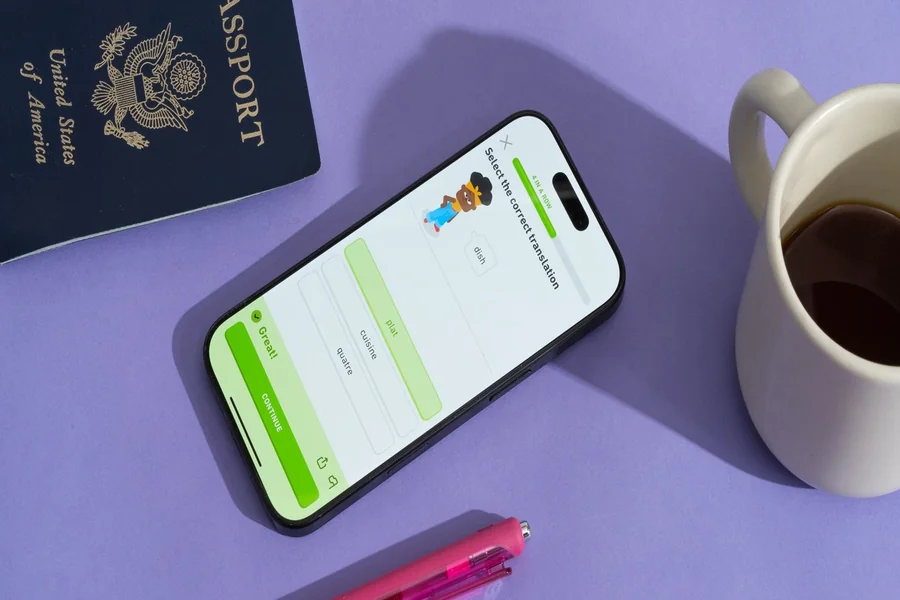
Are you traveling to a foreign country, or visiting family in Latin America?
If so, then you need to start preparing. No, not packing bags. I mean, start polishing the foreign language of your destination country.
If you are wondering why you need to do that, I’ll give you two reasons. You need this so you can:
- Experience the country as a local completely
- Save yourself from getting scammed
For that, you need to learn the idioma (language), which has long-term benefits but requires a lot of effort. You can also work with real-time translation tools.
The best part? I have solutions for both kinds of people.
Apps for Language Learning
There are many apps for language learning if you are up for that kind of challenge. A couple of years ago, I decided to go down this route when I was planning to visit my tío (uncle) in Mexico. I had to relearn Spanish because my uncle does not speak English. Also, because it’s pretty embarrassing that, coming from a Latin American household, I could not speak Spanish.
I am listing down the apps I tried and found helpful for learning Spanish:
· Memrise: Languages for Life
As a language learning platform, Memrise is a great tool to help you speak like a native and not make a joke of yourself in a foreign country.
The app caters to beginners who have zero idea about the language. It teaches context-based vocabulario (vocabulary) and phrases through super interactive videos of native speakers. The spaced repetition factor ensures that you memorize what you learn.
Lastly, Memrise provides personalized learning paths, so you can learn at your own pace, according to your schedule. It is paid, but, in my opinion, has great value for money.
· Duolingo – Language Lessons
What better way to learn something new than to gamify it? Duolingo gamifies learning a foreign tongue in a highly interactive manner.
Each level is a small lesson based on vocabulary and sentences. The exercises allow you to test what you learn and then plan the next lesson accordingly. I find it an excellente (great) tool to keep in touch with the new tongue.
The best part is that it is free and caters to beginners. Plus, it’s available as a mobile app for both Apple and Android users.
Pro Tip: While you are learning, the best way to check how well you can speak is by throwing yourself into a practical situation where you actually try it, no matter what. I remember, a couple of months into learning Spanish, I called my internet service provider atención al cliente de Spectrum to ask about an internet-related situation. The kind service rep was initially confused, but quickly caught up. He then proceeded to explain everything to me very patiently. Apart from getting the answer to my query, I got a real confidence boost.
Best Apps for Translation
If you do not want to learn a new language or have the time, then you can use the following translator apps. I would recommend against using Google Translate because I used it on a trip to Japan and made the shopkeeper laugh at me. It fails to translate with context, which can sometimes result in plain incorrect translations.
· Pocketalk – Translation App
This is the best translation app out there. You speak into it in your preferred language and select the one to which you want to translate.
The app carries out excellent, context-based, and real-time verbal translation, which the other person can easily understand. I love that it carries two-way traducción (translation), as the person can then speak into it, and that will be translated into your preferred language for you.
It is great for casual and spontaneous translations, which is what makes the translation so accurate. Moreover, it is really easy to use and works in real-time, so there are no awkward pauses. However, if you need a formal translation, you will need the Pocketalk device.
Lastly, it supports over 80 languages for verbal translations and 56 for camera translations.
· DeepL Translate
The second translation app recommendation I have for you is DeepL, which is also stellar for translating colloquial expressions.
However, it only provides written translation. The fact that it is used extensively to translate business documents securely shows how good it is. It translates according to linguistic nuances, which result in highly accurate translations.
The app uses neural networks (Deep Learning), which pick up these nuances to translate precisely. I would recommend only using DeepL if you are travelling to a foreign country for work and want to converse formally with your peers.
However, DeepL has very limited languages, so be mindful of it while travelling.
Technology, like everything else, has made translation and language learning very accessible. It helps us bridge linguistic gaps and provides unparalleled ease. No more getting scammed by local guides and being treated as a clueless foreigner. You can use these apps to speak a new tongue proficiently and gain new experiences.
Happy traveling!